





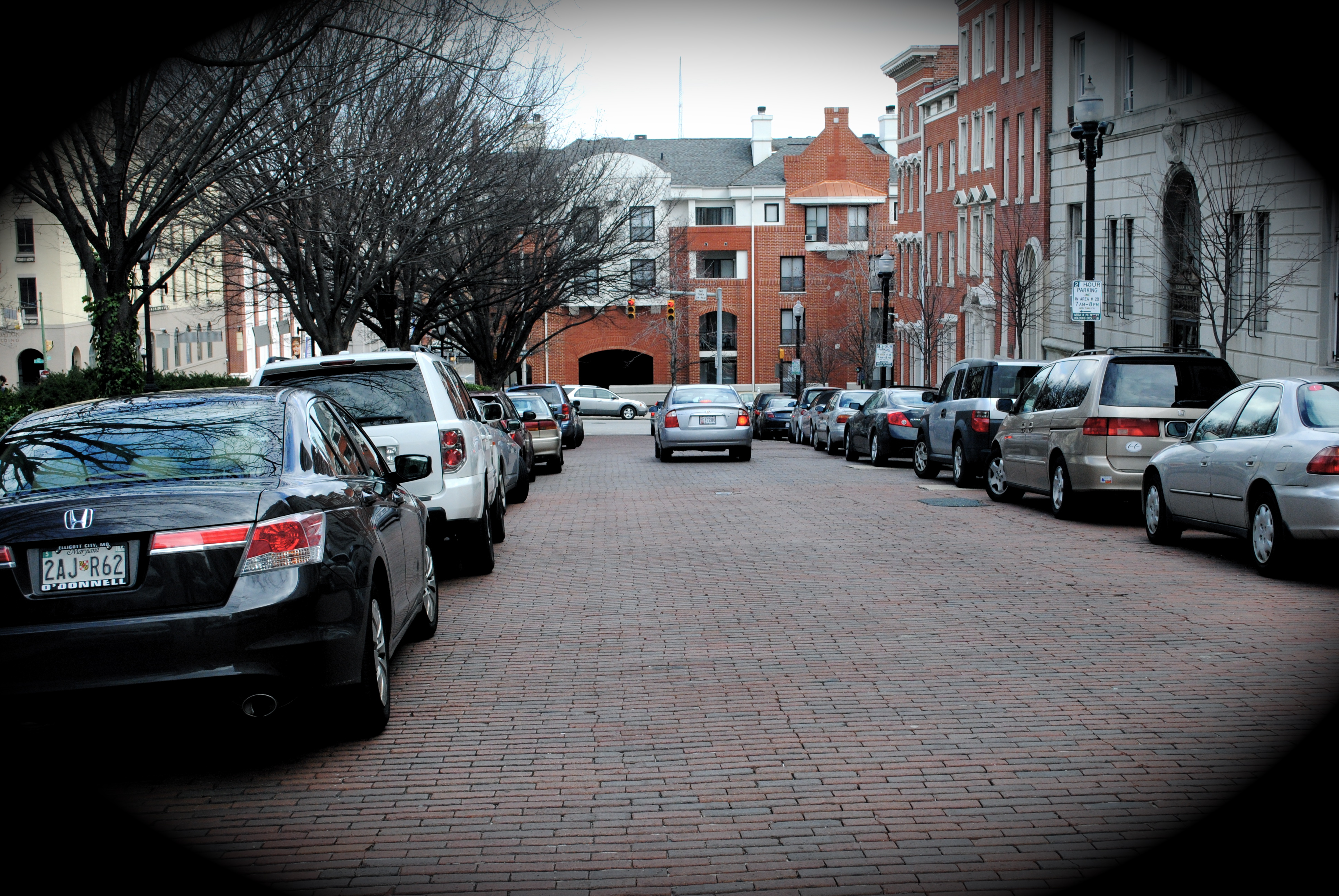



 photo credit: Rachel Cohen
‘Apolitical’ Israel Fairs? No Such thing
Below is an an op-ed I had published in New Voices Magazine about the troubling trend that exists on many college campuses in America when celebrating or discussing Israel. Full article can be read here: http://www.newvoices.org/opinion?id=0160

Photo Credit: Rachel Cohen

Photo Credit: Rachel Cohen
Two weeks ago we celebrated Yom Haatzmaut – Israel’s birthday. It’s an exciting time of year for those of us who care and advocate for the state of Israel. Celebrations commemorating Israel’s Independence Day happened on college campuses all over the country. And yet I observed two troubling trends surrounding many of these events that do injustice to Israel, to pro-Israel advocacy, and to the intelligence of college students.
Many of these fairs are framed as “cultural events” – an effort to create an apolitical space for the discussion of Israel. This goal is impossible. Whether the organizers realize it or not, Israeli society and the American Jewish conception of it is so heavily politicized that it is incredibly difficult to have, do or say anything about Israel that is totally apolitical. As a result, the organizers of these events end up presenting political opinions disguised as facts.
In January I read a powerful op-ed by Haaretz journalist Merav Michaeli. She wrote, “There is no such thing as ‘not political.’ Everything is political. Economics, culture, the media, fashion, consumerism – they are all political. The statement ‘I am not political’ is in itself political. It is a politics that accepts the existing order and reinforces it. It is the politics of not taking responsibility.”
Even though she was talking about Israeli citizens, her sentiments ring true for American Jews as well.
At Johns Hopkins University we recently held our annual Israel Fair, a large campus-wide event. The event was advertised as a day to “learn about the history of Israel and all the amazing accomplishments that have been achieved over the past 64 years.” The event was fun. The falafel tasted delicious. The music was happy and familiar. And yet, something about the event was disconcerting.
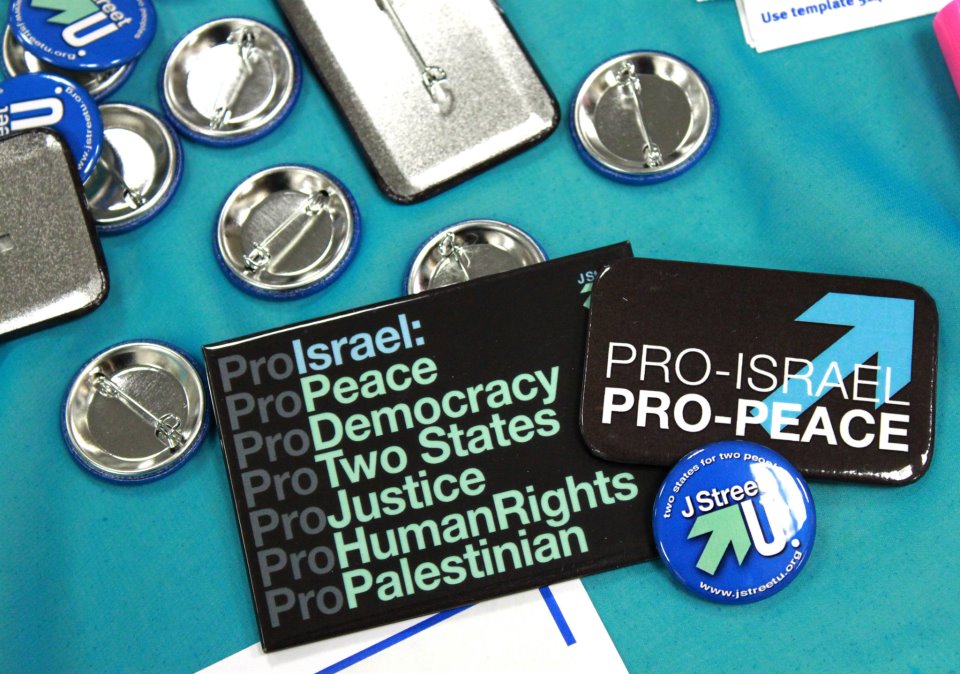
I am the leader of our chapter of J Street U – the college arm of J Street, the American pro-Israel pro-peace group. As a co-sponsor of the event, we were told explicitly that this event was intended to be apolitical. Meaning, in effect, that there should be no discussion of the Israeli-Palestinian conflict, or the peace process in general. The goal of the organizers was to avoid creating an environment that could potentially elicit “anti-Israel sentiment.”
This type of event happens at campuses all across the country.
At the University of Michigan every year they have Israel Birthday Bash where the mainstream pro-Israel group sets up a big moon-bounce in the center of campus and distributes falafel and cake – along with facts about Israel’s achievements and history. Recently at the University of Maryland they celebrated Israel Fest, pitched as “a celebration of Israeli culture with free food, camel rides, inflatable activities, face painting, and more!”
There is nothing wrong with celebrating Israel’s successes, but doing so is only one part of the broader picture of how we should engage with Israel, and the way these successes are presented inevitably carries with it political implications.
All too often, events that are framed as “cultural” partner with national organizations that have explicit political agendas. I watched as pamphlets were distributed at our Israel Fair that reported on Israel’s human rights record, Israeli LGBT tolerance and Arab voting rights. Maps of Israel were disseminated. Fact sheets were passed out about the Israeli Defense Force and Israel’s humanitarian aid to other countries. I do not oppose these topics being discussed, however I reject the claim that these are somehow “not political.” They are.
One popular handout used on college campuses, including mine, is the StandWithUs “Pocket Facts” booklet. Some “facts” from this booklet:
- “Israelis resettled lands their families had owned in the West Bank, where Jews had lived for millennia until the 1948 War when they were expelled.”
- “Iranian leaders are racing to build nuclear weapons.”
When the Chief of Staff of the Israeli military, Lt. Gen. Benny Gantz, says that Iran is likely not building a weapon, it is not a fact to say Iran is “racing to build nuclear weapons.” It might be a mainstream opinion, but it is certainly not a settled fact. When the Israeli Supreme Court has ruled repeatedly, in accordance with the law, that numerous settlements in the West Bank are built on Palestinian land, or land with contested ownership because it was not farmed by anyone for a certain number of years, it is not a fact to say that settlements are categorically built on land once owned by Jews, as implied by the StandWithUs literature. Let us be intellectually honest. These statements are opinions.
Israel fairs are great. We should have them. But they should also directly address the political situation Israel faces. And if they opt not to, we must acknowledge that these fairs are still political. Even when we engage in discussions about Israel’s technological achievements or their treatment of the LGBT community, we must be open about the political nature of these things. Politics does not have to be a dirty word.
More importantly, we’re not doing Israel any good by avoiding the peace process. We should be talking about the two-state solution, Hamas and the Palestinian Authority, Israeli settlements, and rocket attacks. All of these are crucial elements in envisioning and understanding Israel and its future. We should embrace the complexity, and give people actual answers instead of pretending that these issues don’t exist. This is how we can do justice to Israel, get more people involved in pro-Israel activism and show students that we trust them to be smart people.
Pro-Israel advocates cannot shield college students from the conflict. Students will read about it in newspapers. They will watch documentaries they find on Netflix. It is unavoidable. But let’s be proactive and embrace the challenges head on, precisely at a campus-wide event created to learn about Israel. We can provide people with the opportunity to develop a real, deep relationship with Israel, not just one that’s based on a universal love of falafel.
North Carolina’s Amendment One
Tomorrow, a shameful amendment will be voted on by the state of North Carolina–and will likely pass according to all the latest polls. This amendment effectively alters the state’s constitution and will not only make it illegal for same-sex couples to be recognized in the state of North Carolina, but due to the wording of the legislation, will also ban any other type of “domestic legal partnerships” such civil unions and domestic partnerships.
This is the official language on the ballot:
“Constitutional amendment to provide that marriage between one man and one woman is the only domestic legal union that shall be valid or recognized in this State.”
I have friends at UNC who have been doing some amazing work to protest this amendment. But the fact is, that while universities like UNC and Duke tend to be socially liberal, the majority of the state is full of voters with religious and conservative beliefs that make them support laws like this.
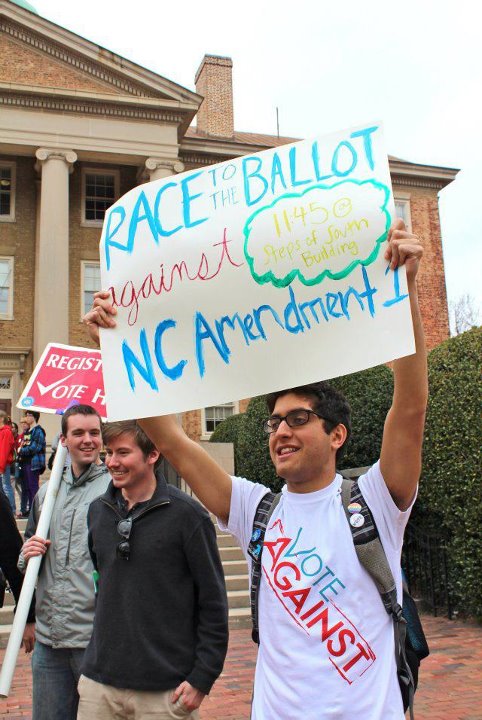
Josh Orol, a sophomore at UNC protesting the amendment on campus
Proponents of the amendment point to states like New York and Connecticut, where same-sex marriage is legal and argue that if those couples then moved to North Carolina expecting certain legal rights, complicated issues would arise. By banning same-sex couples, they no longer have to deal with such hypothetical issues. As Representative Paul Starn said, “They’re going to bring with them their same-sex marriages. They’re going to want to get divorced” and have custody issues decided, he said. “We’re not equipped to handle that.”
Supporters also say that because this issue is so sensitive, it should be decided by the voters themselves, not by a handful of legislators.
Tami Fitzgerald, executive director of N.C. Values Coalition, argues that a popular vote on the amendment is the “right thing to do” and it is more democratic when it allows everybody to vote. Fitzgerald adds, “The people of North Carolina want to determine for themselves how they want to define marriage. They don’t want activist judges doing it for them.”
In fact, this is entirely misguided and incorrect. It is no wonder the NAACP is so involved in this issue and opposed to this amendment. You don’t leave minority rights up to majority vote. Schools were not de-segregated because of a popular vote. Constitutionally enshrined protections are supposed to be immune to this type of thing. These people will receive different benefits and privileges because others voted that to be OK. Think about the implications and the precedents this sets for our country.
Barack Obama and Bill Clinton have come out against the amendment.
—Obama’s statement said, “While the president does not weigh in on every single ballot measure in every state, the record is clear that the President has long opposed divisive and discriminatory efforts to deny rights and benefits to same sex couples.”
—Clinton argued, “The real effect of the law will be to hurt families and drive away jobs.”
People are insisting that this ban will hurt businesses. Many people will no longer be able to receive the work benefits from the state that they once were able to, so it might dissuade people from working there. They also believe it will hurt all sorts of families, including heterosexual couples, by threatening insurance and benefits for unmarried couples and their children.
A high number of voters are expected to vote tomorrow because this issue invokes faith and religion, two historically major motivations in voter turnout. There have been 30 marriage amendments already in place in the United States, and only one, in Arizona has been defeated. However, that was in 2006, and then in 2008 it was reworded and passed.
This is increasing evidence of a growing polarization and ideological divide in our country as more and more nationally report support for same-sex marriage. In 2001, Americans opposed same-sex marriage by a margin of 57 percent to 35 percent. Today, 47 percent are in favor and 43 percent opposed, according to a new Pew Research poll.

Social media activism from a friend’s facebook at UNC
The best thing at this point we can hope for is for enough people to become educated on this issue, and then work together to strongly oppose it. We should not allow for such important issues like human rights and freedoms to be left up to a popular vote.

photo credit: blog.pflag.org

photo credit: pamshouseblend.firedoglake.com/
Military Controversies Must be Reported On
Here is an article I had published this week, 4/30/12, in our weekly political publication, the JHU Politik.
———————————————————————————————————————-
On April 18, the Los Angeles Times did the right thing when it released several photographs of U.S soldiers posing inappropriately with the remains of Taliban suicide bombers in the Zabol province of Afghanistan. The photos, taken in February of 2010, were purportedly of members from the 82nd Airborne Division’s 4th Brigade Combat Team. Secretary of Defense Leon Panetta criticized the newspaper’s decision, arguing that it put innocent U.S. solders at risk and was a matter that should have been handled internally.
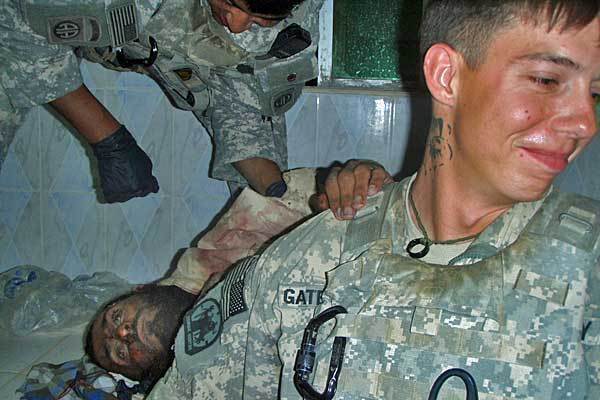
Photo Credit: LA Times
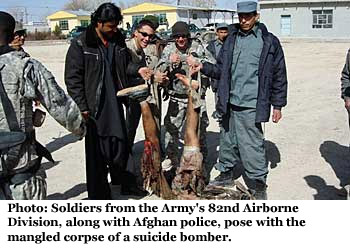
Photo Credit: LA Times
It is true that this is a particularly delicate time for U.S-Afghan relations. In January, a video went viral on the Internet showing four U.S. Marines urinating on the bodies of dead Afghans. The following month, several copies of the Koran were accidentally burned at a U.S base, which resulted in riots and deaths for both Afghan citizens and U.S troops. Then in March, a U.S Army sergeant massacred two Afghan villages, killing 17 people in a nighttime raid.
It would have been tempting for the LA Times to not publish these photos. They might have argued that from a national security standpoint, the timing was not right for such public knowledge. However, the newspaper took the brave route, and did its job.
In response to criticism, the LA Times released a statement that said, “After careful consideration, we decided that publishing a small but representative selection of the photos would fulfill our obligation to readers to report vigorously and impartially on all aspects of the American mission in Afghanistan, including the allegation that the images reflect a breakdown in unit discipline that was endangering U.S. troops.”
The Army launched a criminal investigation after the LA Times showed them official copies of the photos, which were given to the paper by a soldier from the involved division. The Army strongly condemned the actions in the photographs.
“It is a violation of Army standards to pose with corpses for photographs outside of officially sanctioned purposes,” said George Wright, an Army spokesman. “Such actions fall short of what we expect of our uniformed service members in deployed areas.”
The role of the press, is not in the job of doing PR. While of course editors will always have to make hard choices about what does and does not go to print, they do have an obligation to the American people to inform them of the truth, even if it is ugly or shameful.
Some alleged that the Times could have written about the event without publishing the photos. But it is much harder for the government to dismiss such military abuses as abstractions when citizens are exposed to actual images of the crime. The reactions to images of the My Lai massacre and the human rights abuses at Abu Ghraib prove as much.
White House Press Secretary Jay Carney said, “we’re disappointed” that the pictures were published. But criticism should be kept to the culprits of the abuse, not the journalists who shed light on it. The Obama Administration’s “disappointment” for the choices of the free press is troubling. The American people are paying for these wars and have the right to review evidence of abuse. They have a right to see these photographs, even if they are, as we’re told, exceptions to normal conduct.
It’s unclear how these photographs will impact US-Afghan relations or change future military training. But what we do know is this: the American people should work to resist the increasing militarization of our American government, and continue to firmly advocate for our democratic free press.
Feature on Yiddish Theater in Baltimore
Here is an article I wrote for New Voices Magazine on my friend Tamar Nachmany’s play that she directed: http://www.newvoices.org/campus?id=0131





 Rachel M. Cohen