On the state of school integration discussions

Originally published in The American Prospect on February 11, 2016.
—-
Yesterday the Albert Shanker Institute, a think tank affiliated with the American Federation of Teachers (AFT), hosted a panel discussion on school and housing segregation. Featuring Kimberly Goyette, a sociologist at Temple University, Amy Ellen Schwartz, an economist at NYU, Amy Stuart Wells, a sociologist at Columbia, and Richard Rothstein, a research associate at the Economic Policy Institute and former New York Times education columnist—the four speakers explored how best to provide children and families with opportunity.

The panel came on the heels of a few recent school integration developments. First, the Obama administration just released its 2017 budget, calling for $120 million to fund voluntary socioeconomic integration of schools. (Though largely symbolic,national advocates were enthusiastic, as it would more than double current levels of federal funding.) Second, the Century Foundation just released two new reports showing that the number of school districts and charter schools embracing voluntary integration has more than doubled in the past decade. (It’s still a small percentage, though.) And lastly, historian Matthew Delmont has just written a provocative book, Why Busing Failed, which challenges mainstream assumptions about “forced busing” as a tool for desegregation.

Yet despite increased attention, it’s evident that the school integration conversation suffers from a few problems. In many respects, people are talking past one another, disagree on basic terms and definitions, and have strongly different ideas about what the problems even are, let alone what the optimal policy solutions should be.

Are integrated schools something everyone should have, or should we just design “diverse schools” for parents and families who actively seek that? Are we pushing for integration because there’s a particular moral imperative, or has research demonstrated it improves student academic achievement? Are schools with high concentrations of racial minorities considered segregated if families choose to send their children to them? How should we be thinking about the rise of largely white charter schools? Do we talk about racism? Socioeconomic status? The Constitution?

On the panel, Richard Rothstein argued that the country has a long way to go in terms of fulfilling its constitutional obligation to desegregate schools—and that the first step must involve launching a national education campaign so that the public, and progressives in particular, can better understand their history. He called de facto segregation “a national myth”—one that allows Americans to sleep easy in the face of illegal discrimination.

“We have to get serious about desegregating the country, and I don’t just mean desegregating low-income families,” he said. “I mean lower-middle class areas too. We need a fundamental rethinking about our priorities.” Rothstein walked through the history of government-sponsored housing segregation, specifically looking at Ferguson, Missouri, which he’s also written about at length for The American Prospect.

Others were less impressed with his vision. Amy Ellen Schwartz quickly dismissed Rothstein’s ideas, and went on to list various strategies that advocates can employ right now to meet kids where they are. She touted school choice and expanding summer youth employment programs, and in general “strengthening all neighborhoods.” She didn’t spend much time exploring how past efforts at revitalizing poor black communities have worked out, however.

Amy Stuart Wells, a co-author of one of the Century Foundation’s recent reports, noted that one reason to be optimistic is that millennials have more racially tolerant attitudes. Several audience members I spoke with following the event expressed similar hopes. But according to the data, this doesn’t really seem to be true.

And even if it were true, even if surveys did show that millennials have less racist attitudes than previous generations, it’s likely that school segregation would still persist. Parents rely on racial composition as a signaling tool—those schools with higher concentrations of racial minorities tend to have fewer resources and suffer from more difficult challenges, like concentrated poverty. If parents want to provide their kid with the most opportunity, as most parents do, then even a white family fighting for the Black Lives Matter movement would be unlikely to send their child to a school in the ghetto, if they can avoid it. This is why, as Kimberly Goyette suggested, it’s hard to have integrated schools without integrated neighborhoods.

It’s a great thing to see a renewed national discussion around school integration. In a recent interview, former Education Secretary Arne Duncan admitted he would “give himself a low grade” on school desegregation, and said the country “can and should do more” on that front. Duncan’s successor, John King, has also signaled that he plans to prioritize racial and economic integration more on the federal level. “Research shows that one of the best things we can do for all children—black or white, rich or poor—is give them a chance to attend strong, socioeconomically diverse schools,” King said in a speech last month.

It’ll be interesting to see where this all leads. A few weeks ago I reported on a groundbreaking lawsuit in Minnesota—where lawyers are suing the state for allowing segregated schools to proliferate in the Twin Cities. It’s a controversial case, and one that specifically threatens the existence of publicly funded charter schools that cater to high concentrations of racial and ethnic minorities. It has divided the civil rights community, and sparked debates about segregated schooling in the 21st century, particularly within the era of school choice.

Sixty years after Brown v. Board of Education, our neighborhoods and schools are still deeply segregated; we rarely stop to talk about them, save for widely publicized crises, like the death of Baltimore’s Freddie Gray or the water scandal in Flint, Michigan. So bring on the debates, the reports, the panels, and the national discussion. These are all long, long overdue.

Roots & Branches charter will remain open, but public school closures loom large

Originally published in Baltimore City Paper on February 3rd, 2016.
—-

Last night the Baltimore City school board voted to renew Roots & Branches charter school for another three years. It was a victory for the parents and teachersworking to save their progressive elementary, though many other local schools were not so lucky. In early January the school board voted to close four schools—Westside Elementary School, Baltimore Community High School, Maritime Industries Academy High School, and the Maryland Academy of Technology & Health Sciences, a charter school. These four, plus Roots & Branches School, another charter, were recommended for closure in early November.

“Every time you hit adversity you learn something, and I think we’re going to look at some of how we teach math across the board,” says Anne Rossi, the principal of Roots & Branches, which de-emphasizes testing in favor of an arts-infused curriculum. “I think we want to do some professional development, our math scores were not as good as our reading, but I am really optimistic that we are going to be able to show the district improved scores.”

The school closings come on the heels of a tumultuous year, both within the public school community and Baltimore City more broadly. Westside Elementary is located in Penn North, where the bulk of the Freddie Gray protests took place, and many felt shuttering a civic institution was the very last thing the beleaguered community needed.

“I will plead to you one more time please save Westside Elementary School,” state Del. Antonio Hayes asked the school board in November. “There [are] two major institutions in the Penn North community, that’s Westside Elementary School and a very thriving drug treatment center.” Students who would have enrolled at Westside will merge with students at another renovated school.

Alison Perkins-Cohen, the executive director of New Initiatives for Baltimore City Public Schools, says that when making decisions about school closures, the district thinks about which communities could most benefit from better facilities. “With Westside, I know the community was concerned about divestment, but for me it’s the opposite,” she says. “We’re really investing. Westside is closing because they’re getting a new school—we intentionally prioritized neighborhoods with challenges, so they are getting new buildings first.”

Nearly half of the city’s school buildings were built in the 1960s or earlier, and almost all require extensive repair, renovation, or replacement. According to industry standards, approximately 70 percent of the district’s buildings are considered to be in “poor” condition. And they were constructed at a time when the number of public school students enrolled in the district was much greater—upward of 200,000. Today, with roughly 85,000 public school students, there’s a lot of excess space. (Fewer students also means decreased funding, and the district has had some close calls with misreporting how many students are enrolled in the past.)

In 2010, the ACLU of Maryland published a report outlining the miserable state of Baltimore schools, citing things like damaged windows that don’t open, facility doors that don’t close, and badly lit hallways. “Depending on the season, teachers often struggle to engage drowsy children due to the excessive heat, and faulty boiler systems compel some children to wear coats during class in the winter,” the report stated. “Old lead plumbing has forced City Schools to restrict the use of water fountains and instead provide bottled water.” Decades of social science research has shown how unsafe and inadequate school facilities can negatively affect students’ academic performance—particularly when a school has poor temperature control, poor indoor air quality, and poor lighting.

Though advocates have been paying attention to the deteriorating school facilities for some time, inequitable state policy has made it difficult for leaders to take action. In 2004, the state reported that Baltimore had the greatest need among all Maryland school districts to bring its facilities up to acceptable levels of condition—yet legislators failed to target funding accordingly. Baltimore’s lack of wealth also inhibits it from borrowing money, while suburban districts can incur debt to fund capital improvement projects. So Baltimore not only has the greatest need, but also faces the most difficulty raising money. According to the ACLU, Baltimore’s capital budget “pales in comparison” to other large counties.

Following the report’s release, advocates who had been mobilizing for increased school funding—under the banner of the Baltimore Education Coalition—began to shift gears and focus more specifically on school facilities. The ACLU called for $2.8 billion to fund all the needed repairs and capital improvements. (It later revised this figure to $2.4 billion.) By spring 2011, the Baltimore Education Coalition formally joined the ACLU’s “Transform Baltimore: Build Schools, Build Neighborhoods” campaign, and together they pressured the city and state to pay for school improvements.

Baltimore, which is more dependent on state aid than any other district in Maryland, simply cannot fund enough capital improvements on its own. But state legislators worry about wasteful spending, and are loathe to invest in schools with too few students inside them.

“There is a statewide rule that says that any school building that is less than 60 percent occupied cannot receive state school renovation funds,” says Frank Patinella, an advocate with the ACLU’s Education Reform Project. “Some buildings might have broken boilers and inconsistent heat, but the state does not give money, no matter how poor the condition, if it is an underutilized building.” (“Underutilized” is the controversial term used to describe buildings that are deemed too large for the number of students enrolled. According to the district, Baltimore currently has a 79 percent school utilization rate—and its goal is to ultimately reach 86 percent, through school closures.)

“The state feels particularly strongly about the high number of Baltimore school buildings compared to student population and puts ongoing pressure on City Schools to close more and more buildings,” says Bebe Verdery, the director of the ACLU’s Education Reform Project. “I’ve never been to a hearing in Annapolis in which particular legislators did not rail against Baltimore City schools and the state agencies to require more closures faster.”

Perkins-Cohen says that in order to get state funding, the district had to develop a cohesive plan that indicated which schools would close, which would be renovated, and in what order.

Their efforts succeeded, and by 2013 the legislature passed the Baltimore City Public Schools Construction and Revitalization Act, which allows the state to leverage $1.1 billion in construction costs. This funding enables Baltimore to make headway on its “21st Century Plan“—a commitment to fully renovate or build roughly 50 schools, and to close 26 schools. The state, city, and school district have to each contribute $20 million annually over the next 30 years, though equity advocates say the state should be paying a greater share of these costs.

Many community members have raised concerns with the 21st Century Plan, and question the way it’s being implemented.

According to Jessica Shiller, an urban education professor at Towson University, some communities—like Penn North, Edmonson Village, and Hollins Market—will lose more than 40 percent of their classroom seats from the school closures. These communities all have poverty rates that exceed the citywide average.

“There needs to be an outcry, I take every opportunity I can in school board meetings to tell them they’re doing the wrong thing with these closures,” says Helen Atkinson, the executive director of the Teachers Democracy Project, a local group that engages teachers in public policy issues and social justice.

“One of the main things we find is that mobility is just bad for kids,” says Shiller, who has been doing independent research on school closures. “Moving kids around too much has a negative effect on their academic achievement, and closing a school exacerbates mobility, especially for poor kids.”

Another problem, Shiller notes, is that students often wind up in schools that are worse than the ones they left. Though the 21st Century Plan promises that all kids will attend superior, renovated schools eventually, observers note that children who used to attend the high-performing Langston Hughes Elementary School now attend worse schools, and the displaced students will be shuffled to yet another struggling school during the 2017-2018 school year. In addition, Shiller says kids frequently encounter bullying and violence at their new schools, and teachers are often ill-prepared to handle an influx of new students.

Perkins-Cohen says the district’s long-term plan is to provide professional development to teachers working in merger schools, and to focus on “creating cultures and climates” to help students transition more smoothly.

School closures have become a flashpoint in education reform debates across the country, evoking particularly heated opposition in cities like Newark, Philadelphia, and Chicago. Last year, parents in Chicago led a 34-day hunger strike to save a local high school that was slated for closure. Parents and community organizations have also filed federal civil rights complaints under Title VI of the Civil Rights Act of 1964, claiming that school closures in various cities have had a racially discriminatory impact on poor, black students. In December, the Office for Civil Rights at the U.S. Department of Education reached a groundbreaking resolution with Newark Public Schools to help those who may have been negatively impacted by Newark’s closures.

But school closings in Baltimore have not garnered the same kind of mobilized opposition.

Perkins-Cohen says she thinks the politics have played out differently in Baltimore because the district has worked really hard to engage the communities in a thoughtful way. The district’s comprehensive strategy, she says, involves publicizing the 21st Century Plan, making annual school closure announcements several months before the school board votes, organizing robocalls to parents, sending letters home, running ads in newspapers, holding meetings with both teachers and the community, and speaking at school board meetings.

Shiller says her research suggests the public is nowhere near as informed as the district thinks. “While the city did do public forums, they really glossed over this closure information. They said you know we’ll get you wireless internet and air conditioning, and we have to make sure that every school is fully utilized. But the way it was told was to really de-emphasize the closures,” she says. “When I did research it was very clear that it wasn’t communicated very well.”

As of now, it’s unclear what will become of the school buildings that get shut down.

When the district closes down a school, the buildings then return to the city, which owns them. Perkins-Cohen says the city is already thinking about uses for the buildings, in part by asking various city agencies if they might have an interest in the facilities. Sometimes charter operators try to use the newly vacant buildings for their charter schools.

“If you think about it as just a school, then yes it does make sense to close them. Maintaining buildings is hugely expensive, and a city like Baltimore doesn’t have the money to support expenses that are unnecessary,” says Shiller. “But if you think about it from an urban planning perspective, and ask what a school is to a neighborhood, then it’s a very different conversation.” She points out that for many students, schools are where students access food, counseling, after-school programming, and even health care.

Education advocates worry the community won’t have a say in what ultimately happens to these buildings. There are fears that the process will lack transparency, and that buildings may even be left vacant, if nobody wants them. Shiller thinks that right now is a real chance for individuals to speak up with ideas on how to repurpose the buildings, and maybe even figure out new strategies to turn them into hubs of social services.

“The new mayor will be the one really central to making those decisions, and so this leadership change is a really excellent opportunity” for people to get involved in shaping the future, she says. Although some community members tried to save Langston Hughes Elementary School last year, Shiller believes their lack of political capital ultimately crippled the effort. “There were some very inspiring marches, and it got good coverage, but they lacked that political support,” she says. “To stop school closures there really may need to be more aggressive direct action.”

Some wonder whether political capital played a role in helping Roots & Branches to stay open this year. “While I can’t speak to the details of the Roots & Branches case, the fact that it was allowed to stay open adds to the impression that many parents have that charters are treated not just differently, but better,” says Edit Barry, a parent involved inPeople for Public Schools, a new grassroots advocacy group in Baltimore.

Rossi, the principal of Roots & Branches, says the Maryland Alliance of Public Charter Schools did not help them fight their closure recommendation. “I think the charter coalition was understandably cautious and did not throw any weight behind us,” she says. “I don’t know if they didn’t want to show favoritism for us over another charter, or if it’s the [closure] process they wanted to be cautious about protecting, but I will tell you they weren’t part of this effort to save our school.”

Opening up more charters within buildings of closed traditional schools may exacerbate existing tensions between charter advocates and traditional public school parents. Some claim that these closures might even be pretenses for charter school expansions; Atkinson notes that multiple charter operators have been trying to open up schools in communities targeted with school closures, some even angling for the Langston Hughes Elementary School building before it shut down.

“I think people in Baltimore just feel like they will get screwed,” says Shiller. “That’s their go-to feeling—that it’s probably going to be bad—but maybe we can make it a little less bad.”

School Desegregation Lawsuit Threatens Charters

Originally published in The American Prospect on January 26, 2015.
—-

Alex Cruz-Guzman, who came to the United States from Mexico as a teenager, lives in a poor, minority neighborhood in St. Paul, Minnesota. Determined to provide his five children with a quality education, he and his wife were able to send their two oldest daughters—who are now in college—to desegregated St. Paul schools. But it’s become more difficult to find such schools in St. Paul today, and the Cruz-Guzmans were told they would likely be unable to send their three younger children to integrated institutions, even when they offered to transport their kids themselves.

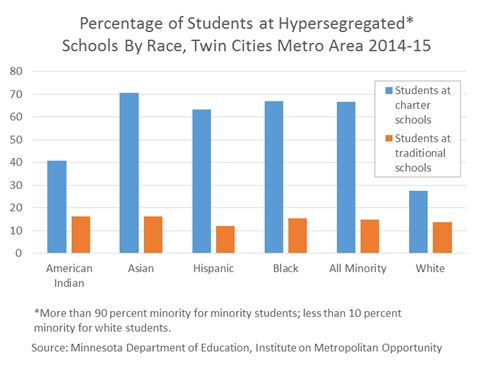
So Cruz-Guzman became a plaintiff in a lawsuit—one that may shape the future of American education. Filed against the state of Minnesota by two veteran civil rights attorneys, Daniel Shulman and his son John Shulman, the suit accuses the state of allowing schools with high concentrations of poor and minority students to proliferate. A 2015 Minneapolis Star Tribune analysis found that elementary school students in the Twin Cities attend more racially segregated schools than they have in a generation. Children who attend such schools, the lawyers argue, achieve far less than their peers in integrated institutions. The lawyers also say that the growth of charter schools, which are even more racially segregated than traditional public schools, have exacerbated these trends.

The Shulmans are seeking a metro-wide integration plan to satisfy what they argue is the state’s constitutional obligation to prevent segregated schooling. They cite the state constitution’s education clause, equal protection clause, due process clause, and the Minnesota Human Rights Act to make their case.

Not everyone agrees that this kind of integration is legally necessary or the best way to meet children’s needs. Some see the suit as a threat to parents’ right to choose the schools that would best serve their children. This is particularly true for parents of color, who sometimes send their children to charters in the hopes of avoiding what they see as hostile traditional schools.

John Cairns, one of the most experienced charter school attorneys in the nation, is working against the lawsuit. “If the state is going to do anything, then they’d have to attack parental choice,” says Cairns. “While the plaintiffs are inexplicit about what their remedy would be, in our view, they’re explicit that their remedy would address charter school enrollments. The only way they could do that is to have some conclusion that parental choice is unconstitutional.”

Daniel Shulman sees in this argument an echo of Plessy v. Ferguson. He thinks charter school advocates are arguing, in effect, that separate schools can be equal. “We don’t think that’s true or the law. If they follow the law, they’ll say separate is not equal, and not equal is inadequate,” he says. “All the data will support that … test scores, graduation
rates. School segregation is a national tragedy and disgrace.”


It’s fitting that this fight would take
 place in Minnesota
, which is both the birthplace of the charter school movement, and a longtime champion of civil rights.

Minneapolis enacted the nation’s first fair housing and fair employment ordinances, and Minnesota passed one of the first state laws banning housing discrimination. In 1948, it was an impassioned speech to the Democratic National Convention by Minneapolis Mayor Hubert Humphrey that led the Democratic Party to pass its first civil rights platform plank. In the early 1970s, under a court order, Minneapolis moved to integrate its public schools. This prompted the state to issue desegregation rules applicable to schools across the state. By the early 1990s, Minneapolis and St. Paul had not a single racially segregated school, and the Twin Cities metropolitan area was one of the most desegregated regions in the United States.

“We had no segregated schools because we had strong civil rights laws and we enforced them,” says Myron Orfield, a law professor at the University of Minnesota and the director of its Institute on Metropolitan Opportunity.

Today, the educational landscape looks quite different. While the number of people of color living in the Twin Cities metropolitan region—defined as Minneapolis, St. Paul, and the surrounding suburbs—has increased considerably over the past two decades, integration advocates say that demographic shifts alone are insufficient to explain the growth of segregated schooling in Minnesota.

And grown it has. Since 2000, the number of elementary schools in St. Paul educating more than 90 percent students of color grew from 2 to 18, while the overall percentage of students of color in the district rose only 11 percent. Similar shifts occurred in Minneapolis. In 1995, the Minneapolis School District was 63 percent nonwhite, but had only two elementary schools that were 90 percent segregated. Today the district has 13 such elementary schools, and 26 percent of district students attend schools with over 90 percent students of color.

MPS SPPS demograpic change chart FIXED.png

The demographics of the 164 charter schools in Minnesota—which roughly 50,000 students attend—have also impelled the state to argue, for the first time, that charters should no longer be exempt from state integration laws. (An administrative judge will rule on this separate dispute in late February.)

The resegregation of the region’s schools, critics say, was the product not just of demographic change but also of conservative pressure in the 1990s to weaken desegregation mandates, coupled with the rise of a charter sector that targeted specific races and ethnicities, thereby accelerating the isolation of poor and minority students. The growth of charter schools, they add, also created new opportunities for white children to congregate in separate schools. Charters attended by predominately white students grew by 40 percent between the 2007-08 school year and the 2012-13 one. Researchers found that more than half of these white charters are located in attendance zones with racially diverse traditional schools.

Opponents of the state’s proposal, and of the Shulmans’ lawsuit, argue that their proponents—state officials, Myron Orfield, and his allies—misapply the label of  “segregation” when talking about charter schools. “I find it offensive and insulting to compare parents of color making choices to send their kids to schools that are better addressing the academic needs of their kids with segregation, a system that was set up by white supremacists decades ago to force students of color to inferior schools,” testified Alberto Monserrate, the first Latino ever elected to the Minneapolis School Board, in early January.

Whether or not one thinks these schools should be considered segregated, the rise of schools with high concentrations of racial minorities—both in traditional schools and in charters—means an increase in the number of schools serving high concentrations of poor students. Researchers at the Institute on Metropolitan Opportunity find the poverty rate at Twin Cities minority-segregated schools to be two-and-a-half times greater than the poverty rate at integrated schools, and five times greater than the poverty rate at predominantly white schools. They also find that math and reading test scores for black students at highly segregated schools are lower than test scores for black students at less segregated schools. Suspension rates, too, are substantially higher in racially segregated elementary schools than in less segregated ones.

IMO.png

“Yes, there’s a difference between segregation that’s imposed by the state versus segregation that is through choice, the first is worse than the second,” says Richard Kahlenberg, a senior fellow at The Century Foundation and a longtime researcher of school integration. “However, the negative effects of concentrated poverty obtain even when concentrated poverty is a matter of constrained choice.”


This is not Daniel Shulman’s first time filing a school segregation lawsuit against the state. In 1995, Shulman sued Minnesota, arguing that segregated schools in the Twin Cities metropolitan area violated both the state and federal constitutions. The case settled five years later, and as part of the settlement, Minnesota established a voluntary integration program between Minneapolis and ten neighboring suburban districts. Most participants were poor minority students who enrolled in predominately white suburban schools.

“But the segregation in Minneapolis and St. Paul is worse today than when I started the first case 20 years ago,” says Shulman. “That’s why I brought the case again, and I’m sorry I waited this long to do it.”

Shulman’s legal strategy rests on a theory that, at this point, is still very much untested. In the past few decades, it’s become increasingly difficult for civil rights advocates to win federal school desegregation lawsuits. Following the 1978 Supreme Court case Milliken v. Bradley, courts began to draw sharper distinctions between de jure and de facto segregation; the Supreme Court said unless it could be shown that a district deliberately sought to discriminate against students by race, it could not be held responsible for school segregation.

“Federal desegregation rulings are about racial discrimination, which looks at intent to discriminate,” says Derek Black, a professor at the University of South Carolina School of Law, who studies education law and policy. “Since the 1980s and 1990s, it’s become more and more difficult to prove intent, which means more and more districts have been released from their desegregation obligations.”

By suing the state, rather than the federal government, the Shulmans aim to bypass all those sticky questions about intent. “What they’re saying is that the actual existence of segregated schools creates an educational harm, and the state ought to correct that harm, regardless of why it came about,” explains Black.

Their strategy has been tried once before, in a 1989 Connecticut lawsuit known as Sheff v. O’Neill. The plaintiffs argued their constitutional rights were violated because the concentration of African-American students in a particular district was a violation of the state’s right to equal education.

The case made its way up to the state Supreme Court, and in 1996, the justices ruled that Connecticut had an affirmative obligation to provide its students with equal educational opportunity. This constitutional right, they concluded, necessitated providing students with integrated educations, and so the state moved to establish an array of voluntary integration options.

Though Sheff is not controlling law in Minnesota, it is expected that Minnesota judges would consider it if they adjudicate the Shulmans’ suit. “I think the more courts that say an idea is a good one, the more likely it is that courts that follow after them will agree,” says Black, pointing to school funding lawsuits as an example. However, Sheff was notably litigated before the rise of charter schools.

In 1993, Minnesota’s Supreme Court ruled that all students are guaranteed a fundamental right to an adequate education. In their new suit, the Shulmans seek to argue that no education could possibly satisfy the state’s adequacy requirement given the highly segregated environments.

Lawsuit opponents argue that “adequacy” should be measured not by the composition of student bodies, but by demonstrated achievement. “What we’re saying is the first thing to look at is whether kids are learning, not who is sitting in the classroom,” says Cairns, the attorney representing the charters. “And once you establish that kids are learning, then that’s the measure of an effective and adequate education.”

Derek Black says most states do consider achievement “outputs” when determining whether students are receiving adequate educations. Such outputs could be scores on standardized tests, graduation rates, or college readiness measures. Though variance exists from state to state, Black says most courts would look at both outputs and inputs. “The question would be whether the failure to provide certain inputs is the cause of an inadequate education, as measured by various outputs,” he says. If Minnesota’s judiciary takes up this groundbreaking case, they will have to decide whether racially and economically integrated schools are necessary inputs.

“I think there’s an increasing recognition that equal education is the constitutional responsibility of state governments, and therefore [states] have to promote policies to avoid racial and economic segregation,” says Phil Tegeler, the executive director of the Poverty & Race Research Action Council, and a leader in the National Coalition on School Diversity. Tegeler hopes lawyers in other states will follow the Shulmans’ lead. “We really need to see more creative, affirmative litigation,” he says.

“This is huge, you could potentially have 50 state lawsuits on this issue,” says Kahlenberg.

Opponents of the lawsuit, and of the state’s plan to include charters under statewide integration rules, say that there’s been a fundamental misinterpretation of what segregation is. They deny that charter schools targeting specific races or ethnicities are illegal or unjust. Rather, they say, these schools provide students with “culturally affirming” environments in which to learn.

Bill Wilson founded one such “culturally affirming” charter in St. Paul—known as Higher Ground Academy. Though Higher Ground’s student body is more than 90 percent East African immigrant and low-income, it’s one of the highest performing schools in the region. Advocates say the school’s success is due to its unique, and culturally sensitive education strategies. “I know people who brought this lawsuit against the state use the word ‘desegregation’ but let’s find the intentional action,” Wilson says. “I won’t call this segregation, I won’t call it racial isolation, because it’s not true.”

“It’s a false analysis that’s being applied to culturally specific charter schools, that tends to consider those schools to be segregated,” testified Nakima Levy-Pounds, the president of the Minneapolis NAACP chapter. “That flies in the face of civil rights history and also the fact that we have historically black colleges and universities around the country that are specifically designed to affirm, enrich, and enhance the educational experiences of African-Americans who we know have faced historical discrimination throughout our time in this country.”

Darrick Hamilton, an urban policy professor at The New School, says his research suggests there certainly could be instances where predominately black schools may be better learning environments for black students. Quoting W.E.B. Du Bois, he says, “The Negro needs neither segregated schools nor mixed schools. What he needs is Education.”

Even among those in the Twin Cities who advocate for integration, the civil rights community remains torn over how to think about charter schools.While the St. Paul NAACP welcomes the Shulmans’ new lawsuit, for example, its leaders have not taken a position on their charter school argument, or on whether charters should be exempt from statewide integration laws.

“It’s hard enough to get a broad coalition of people to say we want to integrate the schools, and when you add the charter school issue, the politics just become much more challenging,” says one Twin Cities civil rights leader. “There are definitely some advocates who say we should focus on desegregating the traditional schools, and if the districts can get their act together then demand for charters will [naturally] go down, because parents will trust that traditional schools can take care of their kids.”

But researchers at the Institute on Metropolitan Opportunity say that segregated charter schools perform even worse than segregated traditional schools. With the exception of a few high performing networks—including Bill Wilson’s Higher Ground Academy—they find that most charter schools that serve high concentrations of impoverished racial minorities produce poorer academic results than traditional schools, even after controlling for variables like poverty and race. The Minnesota Star Tribune also found that slightly more than half of all students in Minnesota charter schools were proficient in reading, compared to 72 percent in traditional public schools.

Defenders of “culturally-affirming” institutions don’t spend much time talking about white charter schools. Yet white charters are on the rise.

“One of the problems with allowing culturally-focused schools to become single-race enclaves is that, once you create a legal justification for these schools, it becomes very difficult to prevent white parents from adopting the same language to create white segregation,” says Will Stancil, an attorney with the Institute on Metropolitan Opportunity. “Integration isn’t about exposing kids to some magic aura of whiteness, it’s about the importance of universal inclusion in education: providing all children full access to the teaching, resources, and networks that the most privileged kids currently have.”

IMO Charters.png

Those who do support including charters in the lawsuit and under statewide integration rules point to a “Dear Colleague” letter that former Secretary of Education Arne Duncan sent around in 2014. Duncan’s federal guidance said charters must be included in court-mandated or state-administered desegregation plans.

“You just can’t exempt charter schools from the basic civil rights laws of the state, they’re supposed to be publicly funded public schools, and they should be subject to the same civil rights requirements as other public schools,” says Phil Tegeler. Myron Orfield says Minnesota is the only state that he knows of that explicitly exempts charters from its civil rights laws.

The rhetoric surrounding these legal battles will likely grow even more charged in the coming weeks and months. By the end of February an administrative law judge should make her final decision on whether charters will be exempt from statewide integration rules. However, if the Shulmans ultimately win their lawsuit, some say this could render any charter school exemptions moot.

“I think ultimately the lawsuit could trump the rule,” says Derek Black. “It could require the state to do a whole variety of things.

Daniel Shulman isn’t worried about what the judge will decide with regards to charters and the state rule. “It would be nice if there were a rule that effectively desegregated Minnesota’s schools—that’s one way the state could begin to remedy the result of its past constitutional violations,” he says. “But this rule is not going to effect the lawsuit.”

The state of Minnesota has filed to dismiss Shulman’s lawsuit, and a judge will consider this motion in a hearing in April. (A spokesperson for the Minnesota Department of Education told The American Prospect that they cannot comment on the case, but is “committed to helping every student achieve academic success.”) If the case is not thrown out—and it can be appealed, if it is—then the trial will likely be scheduled for late 2017.

“I know for a lot of leaders it’s convenient to not do anything or to not talk about these issues, but for the children who are kept separate, it’s wrong,” says Cruz-Guzman. “We feel we’re doing the right thing by bringing the lawsuit.”

Minnesota is not the first state to wrestle with the challenges of balancing school choice and desegregation. And it surely won’t be the last. Cairns, who serves on a litigation panel for the Alliance of Public Charter School Attorneys, says that he and his colleagues recognize the “wide-ranging implications” of this case. Though it’s not a federal suit, Cairns believes its outcome will be “hugely important to provide direction” to the rest of the country.

Charged with Firing Teachers for Organizing, a Chicago Charter Network Settles

Originally published in the American Prospect on January 12, 2016.
—-

The National Labor Relations Board finalized a settlement agreement this week between Urban Prep Academies, an all-male charter network in Chicago, and more than a dozen Urban Prep teachers who were fired abruptly back in June. The firings came less than a month after a majority of teachers at Urban Prep voted to unionize with the Chicago Alliance of Charter Teachers and Staff (ChiACTS). Urban Prep will pay over $250,000 in back wages and severance to 13 fired teachers, and two of the fired teachers were able to return to work on Monday. The others, who already had taken new jobs elsewhere, waived their right to reinstatement and settled for back pay.

Back in June, the union responded to the firings by filing two unfair labor practice charges with the NLRB. One alleged that Urban Prep fired three teachers for their union activism; the second charged Urban Prep with failing to bargain with the union over all the teachers’ terminations. Educators, parents, and community members organized protests, urging Urban Prep to rehire the teachers.

Urban Prep’s COO, Evan Lewis, said earlier this summer that “the suggestion that anyone was fired as a result of their organizing activity is both wrong and offensive. … We respect and support the right of our teachers to choose a union as their exclusive representative. … Many of the teachers returning next year were active in the effort to organize, and we look forward to continuing our work with them.”

However, the NLRB launched an investigation into the situation, and on November 20, the board issued a complaint, finding that one teacher was fired for union activity and that Urban Prep failed to meet their legal obligations by not bargaining over the teachers’ firings. The NLRB scheduled a hearing for January 13, which has now been cancelled since Urban Prep decided to settle.

“We’re glad we were able to settle the charges rather than having to continue a long legal fight, because if Urban Prep had lost at the hearing they could have appealed,” says Carlos Fernandez, an organizer with ChiACTS. “These kinds of charges can take years to settle, so [resolving this] in just a little over six months is pretty good.”

The teachers at Urban Prep have been meeting regularly with their employer since September to work out the terms of their first contract; the union says they’ve made “significant progress.”There are currently 29 other unionized charter schools in Chicago, and a growing number nationwide.

The total amount that Urban Prep has agreed to pay—$261,346—marks the largest unfair labor practice settlement for charter teachers to date. Back in June, the I Can charter network, based in Ohio, had to rehire four teachers and give seven teachers back pay for firing them during their 2013-2014 union drive. That settlement totaled $69,000.

“It’s unfortunate that these publicly funded schools often react so poorly when their teachers choose a union, and it’s even worse when they’re able to waste so much time and money union busting, something well outside the scope of the work the people of Chicago pay them to do,” says Brian Harris, a special education teacher in Chicago and the president of ChiACTS. “We often hear from charter operator groups that they’re ‘not anti-union but pro-teacher.’ One would assume that the ‘pro-teacher’ part would kick in after a mass illegal firing. Nonetheless, we’re very happy that we can move forward and finally begin to work on what is most important: making Urban Prep a better place to teach and to learn through empowering teachers.”


New Education Law Sparks Civil Rights Concerns

Originally published in The American Prospect on January 8th, 2016.
—-

The sweeping new federal education law known as the Every Student Succeeds Act (ESSA) has drawn praise from educators and lawmakers who had become increasingly frustrated with No Child Left Behind, the controversial federal education law on the books since 2002.

But one group has voiced reservations about the new law: civil rights advocates. Civil rights leaders have praised the law as an improvement over the No Child Left Behind Act, which tied federal funding with school performance. But they have voiced concerns that ESSA, which largely leaves accountability goals up to the states, could leave marginalized students even further behind.

Their big fear is that under the new law, states may not hold schools truly accountable for poor performance, making it harder to close the “achievement gap” for disadvantaged students. Despite all of the No Child Left Behind Act’s flaws, education researchers found that it led to small but substantial gains in student achievement, particularly for black, Hispanic, and low-income students.

The new law has placed two key progressive constituencies—unions and civil rights groups—at odds. Unions are celebrating the return of power to states and local districts, and an end to continuous testing mandates. But a broad coalition of civil rights groups that includes the Southern Poverty Law Center and the NAACP, has cautioned that the Every Student Succeeds Act must not let states off the hook for failing to educate the nation’s most vulnerable students.

Civil rights have long been at the heart of American federal education policy. ESSA reauthorizes the Elementary and Secondary Education Act, a civil rights law originally passed in 1965 that was designed to raise the academic achievement of marginalized student groups, including the poor, the disabled, racial and ethnic minorities, and non-native English speakers.

It took years for Congress to pass the Every Student Succeeds Act, and throughout the process civil rights groups worked hard to ensure that their concerns were being heard. While ESSA expands on important reporting requirements first imposed by No Child Left Behind, the new law does not require states to respond to inequities if data reveal that they exist.

“Data is always an important first step, but what we wanted was a requirement that when there are disparities, the schools, districts, and states have to take action,” explains Liz King, the director of education policy at the Leadership Conference on Civil and Human Rights. (The law also does not require states to disaggregate Asian American and Pacific Islander data by ethnicity, which civil rights advocates worry will obscure important differences.)

Most importantly, civil rights organizers voice serious concerns that states will now essentially hold themselves accountable. Under No Child Left Behind it was the federal government, not the states, that had the last word on school performance.

“The hard-learned lesson of the civil rights community over decades has shown that a strong federal role is crucial to protecting the interests of underserved students,” wrote the Leadership Conference on Civil and Human Rights in a letter to Capitol Hill last year. While the law includes some measures that will help advocates push states and districts to ensure that disadvantaged students don’t slip through the cracks, some experts say it will be harder for the federal government to intervene in the event that states fail to act.

One specific equity measure that civil rights groups tried and failed to win during ESSA negotiations was the closing of the so-called “comparability loophole.” In order for states to access Title I funds, which are federal dollars that go to high-poverty districts, they have to demonstrate that they’re providing “comparable” levels of services to both Title I schools and more affluent schools. The new law, like the old law, allows states and districts to exclude real teacher salary costs from expenditure calculations. That means that a district could be considered “comparable” if it has a bunch of novice, inexpensive teachers in one school, and many highly paid veteran teachers in another.

According to a 2015 report issued by the Center for American Progress, a liberal think tank, 4.5 million students attend inequitably funded Title I schools—receiving about $1,200 less per student on average than wealthier schools in their districts. (Closing the loophole would only address intra-district disparities, but advocates say that it’s an important step for educational equity nonetheless.)

Historically, teachers unions have been wary of efforts to close the loophole, fearing that districts might respond by making veteran teachers transfer involuntarily to more disadvantaged schools. In recent years, however, unions have softened their stance, recognizing that districts could respond to inequities not through forced transfers, but by investing in disadvantaged schools in other ways. Still, the National Education Association and the American Federation of Teachers did not push as hard to close the loophole during ESSA negotiations as civil rights groups did.

Nevertheless, civil rights groups did win some of their key demands.

Although Congress did not close the “comparability loophole,” districts will now be required to report actual expenditure data at the school level, something civil rights leaders say is a huge improvement over No Child Left Behind. (Other data reporting requirements have also been expanded.) Civil rights advocates hope that this new level of transparency will go a long way towards highlighting funding inequities, and pave the way for further reforms.

States will now also have to do more to help students become proficient in English, and there are more accountability measures in place to ensure schools are making progress toward that goal.

“This was a very important goal for us; research suggests the longer you’re identified as an English-language learner, the less likely you are to graduate high school,” says Brenda Calderon, ‎the Education Policy Analyst at National Council of La Raza, a Latino advocacy organization.

In addition, no more than 1 percent of students with disabilities may now be given so-called alternative assessments, a form of test less rigorous than what the general student population takes. This was a key priority for disability rights advocates, who said too many students with special needs were being separated from their peers without good reason. Taking alternative assessments can have negative consequences, like preventing disabled students from graduating with a regular high school diploma.

The law also offers some additional protections for homeless children and children in foster care, expands opportunities for children in the juvenile justice system, and includes measures to help schools deal with emotional trauma.

The big challenge for civil rights groups during negotiations was that Republicans control both the House and Senate. For years, conservatives have been seeking to reduce the federal government’s role in education policy, and to a large extent, they succeeded. It didn’t help the civil rights coalition that teacher unions largely agreed with the GOP on the need to shift power back to the states.

Over the next two years, legislators and advocates on the state and federal levels will work through a regulatory process to flesh out what the requirements of the new education law actually mean.

“What we’re hoping for is some real state and federal leadership, because it doesn’t serve anyone well if we wait until things aren’t working,” says King, of the Leadership Conference on Civil and Human Rights. “We want to make sure there are affirmative steps to ensure there is equity. We’re planning to help influence the regulatory process, to shape what the terms in the law actually mean, and to inform guidance about how to comply with the law.”

Civil rights groups are bracing for what they say will be a lot of challenging fights in all 50 states. The Every Student Succeeds Act will require parents and advocates to continually pressure states and districts to make sure disadvantaged students get the same education as their more-privileged peers. It’s an uphill battle, civil rights advocates acknowledge.

Yet along with conservatives and teachers unions, civil rights organizers have praised the new law’s expanded data reporting requirements, the continuation of annual student testing in third through eighth grades, and the reduction of harsh, test-linked penalties. Everyone, for now at least, agrees that the new law is an improvement over No Child Left Behind.

The Charter School Business

Originally published in The American Prospect on December 22, 2015.
—-

Rutgers University professor Bruce Baker is a longtime expert on charter schools, which are in the crosshairs of a nationwide debate over school performance standards. Recently, Baker, and his colleague Gary Miron, authored a study about the ways in which individuals, companies, and organizations profit through laws and regulations governing the charter school sector. In an interview with The American Prospect, Baker discusses some of the most egregious policy problems, and steps that governments could take to fix them. What follows is an edited transcript.

Rachel Cohen: Your report explores what you call, “The Business of Charter Schooling.” Has this been studied much before?

Bruce Baker: I don’t think it’s been systematically studied because I don’t think there are many unified data sources for this information—it’s more like investigative reporting. I had been repeatedly asked to look into charter school real estate deals and things like that but getting good data just isn’t easy. This was really just a first cut at summarizing the business practices and financial transactions occurring in the charter sector, and what policy structures encourage or permit these things to happen.

RC: You say that current laws and policies governing charters are increasing the privatization of public schooling. What do you mean?

BB: I want to be careful on this issue of ‘privatization’ because I don’t think the intent of our report was to say that public policy is promoting privatization, or that privatization is necessarily bad or good. But there is a long line of case law that carefully parses under what circumstances, and in what settings, certain activities of charter schools are public or private. I’ve coauthored law review articles where we discuss extensively how the charter school industry claims it is “private” when dealing with questions of employee rights, student discipline policies, student handbooks, or contracts, and “public” in other respects.

The idea put forth in our report is that there are certain policy structures, and in some cases lack of policy controls, that are permitting more extensive degrees of privatization in some states. Sometimes it just makes business sense for charter operators, good or bad, or it affords them a way to do something more quickly or cheaply. But I think that some actors in the charter world such as Imagine Schools, White Hat, and Charter Schools USA, are taking advantage of these opportunities in ways that are self-enriching and not in the public interest.

RC: What are some examples?

BB: Sometimes charter providers take actions that are illogical and inefficient from a public policy standpoint, but it might simply be what they have to do to get by. For example, sometimes charter providers create third-party entities, and then pay rent for the school facilities to these new entities. Since charters can’t directly purchase land themselves, these third-party entities allow them to take advantage of tax incentives and to carry revenue-bond debt to purchase property. Unfortunately, because they’re doing this through revenue bonds, they’re getting a crappier interest rate than a district might get and they have to spend a greater part of their operating funds to get facilities. That’s one example of how policy basically backs a charter school into engaging in inefficient activities.

In other cases, charter providers may engage in ethically suspect, but perhaps not illegal, behavior. For example Imagine Schools runs its own property acquisition arm, Schoolhouse Finance. Similarly, Charter Schools USA, a for-profit company, runs Red Apple Inc., and acquires properties to lease them back to the charter school. And in some cases it does actually become illegal. In Kansas City a court ruled that Imagine Schools went over the line with self-dealing, because they overcharged themselves so much in lease payments. [These leases are being paid for with public dollars.]

RC: You note that many public school districts have privatized services for years. What makes what’s happening in the charter sector different?

BB: The modern era of privatized contracted school management started out in the 1990s, as traditional school districts would engage in contracts with private organizations to run schools. But in these cases, the contracted manager works for a local board of education, and is paid through a district budget. So at least at the top level of the organization, the district and the board of education know the details of that private contract.

Whereas if you look at some states, sometimes it may be private entities that actually authorize charter schools, and charters are established through boards of private citizens who then might contract a private company to run their school. The opportunities to shield disclosure, at multiple levels of the hybrid, publicly funded, privately managed and governed system, are dramatically increased in the charter sector.

RC: You note that school districts, many of them starving for cash, have been selling off their public assets—such as school facilities and land—to the charter sector. If one day, the public sours on charter schools, and wants to return to traditional public education—might this not be possible?

BB: Yes, the turnaround would just be too expensive. Maybe 15 years down the line it will be different, but as it stands now, the case for spending sufficiently on a system of public schooling is just not strong. Despite the economic turnaround, most states are still spending less and less on schools.

If you start thinking how much short-run expense would be required to even acquire new urban land to educate students, and then to develop suitable facilities—well, it’s very high. And in some cases, the land and buildings that are being used by charter operators are actually owned by for-profit real estate investment trusts. They’re certainly not going to sell land and buildings back to cities below market value just to support the public good.

I think we do need to be paying more attention to the capital available to educate the children we’re responsible for educating. If we sell it off, and change our minds about charters down the line, we are screwed.

RC: You recommend instating far greater financial reporting requirements. How would this help?

BB: Any entity, private or public, engaged in the delivery of school services should have to report their expenditures. Right now we have to go fishing through IRS 990 forms—if the manager is nonprofit—and it gets very messy. I’d like to see charter financial data reported into a publicly accessible system. Some states do a much better job of this, but you really have to fish for these little pieces of information here and there to try and pull it all together. There’s got to be better accounting for the overlapping financial relationships, so that people can understand how money is being passed between interested parties.

RC: People often talk about charter networks like KIPP, but it seems like there are far bigger networks that slip under the radar. Your research suggests that these networks come with more problems or ethical concerns.

BB: There are certain charter schools we hear about in the media—like KIPP, Uncommon Schools, and Success Academy. And I have my own concerns about the pedagogy and compliance with students’ rights issues at those schools, but when you start looking nationally, what we see is that the dominant players operating charter schools in many states are Imagine, which has found itself in court for self-dealing, White Hat, which was just involved in an Ohio Supreme Court case, National Heritage Academies, Mosaica, Charter Schools USA … and in many states, and nationally in the aggregate, these are much bigger than KIPP or Achievement First, etc.

These networks are not the names we hear about when we hear about the next big study to show how well charters are doing. These are not the networks we hear charter advocates saying we need to expand. Rather we see advocates saying that if we just remove caps and deregulate we’ll see a lot more networks like KIPP. That’s not the case. It hasn’t been the case. And it won’t be the case.

RC: School choice advocates often say that more money is able to “get down to the classroom level” in charter schools, because we do away with large district bureaucracies. This was a common theme in Dale Russakoff’s recent book, The Prize. Is it true?

BB: It’s a complete mischaracterization. It’s one of those cases where the public rhetoric and the research that’s been done really over quite a long period of time are entirely at odds. There are numerous studies that have looked at the administrative overhead expenses of charters and found them to be very high. The vast majority of charters have relatively low total classroom instructional expenses, and studies have consistently found that the proportions spent on administration and other centralized expenses are much higher in charters.

My graduate student, Mark Weber, wrote about the misuse of data in Dale Russakoff’s book.

RC: What recommendations in your report do you expect to garner the most opposition?

I would expect to get significant pushback from the various types of private entities that have enjoyed their current opportunities to shield disclosure.

We also make the case for a centralized, publicly governed authority to manage facilities, or perhaps even all capital resources. Allocating public space to charter operators both reduces the potential for inefficient expense by charter operators and maintains the public’s interest in its public assets.

Some public school advocates, who are fairly anti-charter, have been opposed to the idea of “co-location” which is where a charter and a district school share space within the same building. It has led to some problems, but when I look at the big picture, it’s a hell of a lot better for the public to maintain the public facilities and allow charter operators to use them, rather than sell them off.

I fear this report is going to be seen as us saying all charters are evil, or bad, or money grabbing. What we’re saying is there are good charters but also bad ones, and the bad ones are bigger than you think. Charters represent a significant portion of our public school system system and we’ve got to figure out how to make them work better for the public interest.

New York City Tackles School Segregation

Originally published in The American Prospect on December 9, 2015.
—–

Six decades after the Supreme Court ruled that segregated schools are “inherently unequal,” integration may finally be coming to New York City.

With 1.1 million students, New York City is home to one of the nation’s largest public school systems; it’s also one of its most economically and racially segregated.

For decades, nobody in the city besides a few die-hard activists seemed to care much. Over the past year and a half, however, a perfect storm of provocative research studiesnews reportsrezoning fights, and public advocacy have forced public officials to take notice.

Last month the New York City Department of Education announced that at the start of the 2016-2017 school year, seven public elementary schools will participate in a new pilot program designed to diversify student bodies. Each of the seven schools will be permitted to set aside a certain percentage of seats to give priority enrollment to various student populations, including English language learners and those living in poverty.

Though some advocates have expressed concern that the pilot program is too little, too late, there are signs that that even bigger desegregation efforts are yet to come.

This pilot represents the first concrete step taken by New York City Mayor Bill de Blasio’s administration towards desegregating the city’s public education system. Despite de Blasio’s reputation as a progressive, his administration has so far failed to tackle the segregation issue head-on.

As an example of his administration’s half-measures, earlier this fall, New York City Schools Chancellor Carmen Fariña suggested that instead of desegregating schools in poor neighborhoods, public schools could diversify by pairing students in wealthy schools with kids in low-income schools to share resources, meet in person, and become pen pals. Fariña also said school diversity could be promoted by teaching students about world religions in their classrooms.

These proposals drew fire from school equity advocates, but de Blasio defended them, and suggested that promoting school choice and high-quality schools are more pressing priorities than desegregation. Critics faulted de Blasio for perpetuating the policies of his predecessor, Michael Bloomberg, who also did little to tackle segregation.

“The whole idea of us voting Bill de Blasio into office, with his mixed family, was for him to usher in a new agenda—a progressive agenda,” says Jose Vilson, a New York City math teacher and prominent social justice activist. “But what we’ve seen is that he still has to deal with the old politics defined by Giuliani and Bloomberg.”

De Blasio also took heat for failing to follow up on the few steps toward integration that Bloomberg’s administration did take. At the start of the 2013-2014 school year, P.S. 133, an elementary school located in a gentrifying part of Brooklyn, unveiled the city’s first-of-its kind admissions program to reserve spots for English language learners and low-income students. Bloomberg’s then-school chancellor, Dennis Walcott, hailed the innovative program as a potential model for other schools.

But de Blasio failed to follow through once in office, and officials within his administration told principals who wanted to establish diverse admissions policies that the city lacked the legal authority to approve their requests. School equity advocates cried foul—pointing to federal Education Department guidance posted in 2011, which affirmed school districts’ legal right to promote diversity through admissions.

Now that de Blasio has come around, advocates make sure to point out that they had been right all along. David Tipson, the executive director of New York Appleseed, an organization that promotes equity in schools, says that the de Blasio administration’s recent pilot announcement “represents a complete and utter rejection of those bogus legal arguments” that they had used for so long.

MOST SCHOOL INTEGRATION ADVOCATES have hailed the seven-school pilot program, but warn that de Blasio’s one-school-at-a-time approach has pitfalls. There are more than 1,700 public schools in the city, and if desegregation efforts are not carefully coordinated, then desegregating one school can have the adverse effect of exacerbating segregation at another.

To really foster school integration, advocates say, the city needs to adopt what’s known as “district-wide controlled choice”—a desegregation model used in other cities, such as Cambridge, Massachusetts, and Champaign, Illinois—that aims to balance parental choice with diversity. Parents rank their top school choices within a particular district, and then the district assigns students in a way that accounts for those preferences while also ensuring that each school has an integrated student body. (In New York City, this would mean assigning students within the system’s 32 separate school districts.)

“There’s always a fear with incremental change that the most recent increment is your last—that maybe this is as much as we’ll ever get, but I think this [pilot announcement] is really just breaking the seal,” says Tipson, who notes that this is the first time the de Blasio administration has acknowledged that gentrification must be managed at the school level, and not just through housing policy.

The school integration debate will only intensify in New York City, where gentrification and school overcrowding are both growing issues. This past May, the New York City Council passed a new law known as the School Diversity Accountability Act that requires the city to annually publish detailed student demographic data and make clear what steps it has taken to advance school integration. The first report generated by the new law will be published at the end of December.

“I think the pilot program is a good first step, and I hope more schools will do it, but I also agree that in a city with 1,700 schools we have a lot more steps to take,” says City Council member Brad Landers, a co-sponsor of The School Diversity Accountability Act. “We have to keep pushing forward, and the most important and most immediate next steps need to be moving towards district-wide diversity.”

Julie Zuckerman, a principal at Castle Bridge, a Washington Heights-based elementary school participating in the diversity pilot, says when she first founded Castle Bridge six years ago, nobody was interested in discussing integration. She tried to get the city’s permission to prioritize diversity in their admissions lottery, but officials were not supportive. Now under the pilot program, Castle Bridge will be able to ensure that at least 60 percent of its student body qualifies for free or reduced-price lunch, and that the school educates at least 10 percent of kids with incarcerated parents.

Zuckerman says she also plans to build off the momentum from this pilot program to push for district-wide solutions. She currently serves alongside a half dozen other principals on a city superintendents’ advisory panel, where she intends to make the issue a priority.

“This [pilot] is not even a drop in the bucket, and yet it’s the first acknowledgement by the city that it doesn’t have to be the tail wagging the dog on gentrification,” she says. “Let’s harness gentrification instead of being determined by it.”

The seven schools in the pilot program all happen to be progressive schools—that is, institutions that test innovative, often experiential curricula in ways that appeal to middle-class parents. Though many of the progressive schools started out with diverse student populations, teachers and administrators say they have recognized that their school demographics have started to shift in recent years, as more affluent families apply, and poorer families find they can no longer afford to live in the city.

Jia Lee, a teacher at The Earth School, another diversity pilot participant, notes that over the last few years, her school has grown “much more white and middle class” and that it no longer feels “reflective of the community.” She says the school’s new set-aside policy, which will reserve 45 percent of its seats for low-income students, will help ensure that their school can educate a diverse student body in the years to come.


ONE OF THE BIGGEST POLITICAL CHALLENGES for advocates of district-wide controlled choice is garnering support from parents who send, or intend to send, their children to public schools that already have mostly white and affluent students. Last month, de Blasio told Chalkbeat NY: “You have to respect families who have made a decision to live in a certain area oftentimes because of a specific school.” In effect, he suggested that given the investments parents have already made to send their kids to certain schools, it would be wrong to try and modify those institutions after the fact.

His comments immediately garnered pushback. “Is it not disrespectful, in fact, to tell low-income families that they can’t go to a certain school because they couldn’t buy a several million-dollar co-op?” wrote Donna Nevel, a local educator and activist in an open letter published in The Huffington Post.

Experts say that the set-aside policies will work to prevent more schools from “slipping”—a term used to denote formerly diverse schools that have become heavily gentrified. If fewer schools “slip,” then there may be less political opposition to larger, systemic policy change.

Dao Tran, a parent of a third grader at Castle Bridge, says that while she doesn’t believe desegregation is something that can be solved school by school, she thinks advocates “have to start by showing certain integrated models that work.” In that sense, Tran believes the success of this pilot program could help to persuade skeptical parents.

“To me, these are all steps along the way, and I agree if we just stopped with this pilot then we have not done anywhere near enough,” says Landers, of the City Council. In a statement, the city’s education department also said the pilot program “remains one piece of a larger effort” to expand diversity across city schools.

The next step, advocates say, will be building a political consensus behind real change.

“It’s almost easier to talk about police brutality than it is to talk about school integration,” says Landers, noting that a swirl of of guilt, resignation, parents’ concerns for their own kids, and racism all work together to make school segregation a tough issue for people to reckon with.

But Ujju Aggarwal, a New York City education researcher and activist, voices optimism. In her 15 years in the district, Aggarwal says she has never seen school integration discussed so broadly until now.

“What’s increasingly clear is that this city has to take a stand respond to the crisis of inequality and segregation that is particularly pronounced in our education system,” she says. “I’m hopeful that with the increased visibility of this issue the city will respond in a more systemic way.”

Can Teachers Unions Help Online Charter Schools?

Originally published in The American Prospect on November 27, 2015.
—-

In a major win for the movement to organize charter schools, a California state labor board recently ruled that teachers working for the state’s largest online charter network could form a union.

Teachers for the network, known as the California Virtual Academies, have been battling since April of 2014 with administration officials who refused to negotiate. That’s when more than two-thirds of the so-called CAVA network’s teachers voted in favor of unionizing.

Roughly 15,000 students attend CAVA’s 11 campuses across the state. CAVA administrators had argued that teachers at those disparate campuses should form their own individual unions instead of organizing a single union that would represent them all.

In a 77-page legal decision, the California Public Employment Relations Board (PERB) rejected this argument—setting the stage for CAVA teachers to move forward with their network-wide union. The California Teachers Association (CTA), a state affiliate of the National Education Association, will serve as their exclusive bargaining representative.

To teachers who have been agitating for a union, gaining the leverage to improve working conditions is a key first step to boosting student performance—something the online charter sector greatly needs. The teachers’ labor victory comes on the heels of several recent reports concluding that online charter schools are performing extremely poorly. Some 200,000 students take online classes through such institutions nationwide.

“Academic benefits from online charter schools are currently the exception rather than the rule,” stated researchers in a report released by the Center for Research on Academic Outcomes on October 27. It was one of three different research studies released last month that arrived at similar conclusions.

Earlier this year, the progressive group In the Public Interest, which focuses on contracting and privatization, issued a report that looked specifically at problems within the CAVA network. It found evidence of poor academic outcomes, financial conflicts of interest, and insufficient supports for teachers, among other things.

CAVA is managed by K-12 Inc., a publicly traded company based in Virginia that made $55 million in profits last year. The K-12 Inc. schools offer classes to some 14,500 students across the country.

K-12 Inc. officials diputed the methodologies behind the critical reports. But the CAVA teachers who have been organizing for a union said the findings did not surprise them.

“I think those reports actually helped us because they just reinforced what we were already seeing with our own students,” said Stacie Bailey, a CAVA teacher on the organizing committee.“We’ve been trying to push the school to focus more on instruction for a long time.”

Bailey actually spent several years working as a CAVA administrator, until she grew so frustrated with how things were run that she went back into teaching.

“Personally, I joined the union drive because I just see that teachers do not have a voice at our school,” said Bailey. “It’s too top-town. I tried to give teachers that voice while working as an administrator, but I was not successful.”

Working for an online charter school poses some unique challenges for teachers looking to organize. “We engage in the workplace from our own homes, we are isolated, we do not see each other,” said Jen Shilen, a high school history and economics teacher who worked at CAVA from the fall of 2012 up until this past summer. “The process of building rapport with colleagues can be challenging.”

CAVA teachers say they grew interested in the idea of forming a union when their workloads and responsibilities spiked dramatically beginning in the fall of 2013—particularly when they were asked to perform more clerical duties. More paperwork meant less time to work directly with students, teachers say. Organizing talks kicked off at the end of 2013, and CAVA teachers soon approached the California Teachers Association for assistance.

“Some of us used to work for union protected schools, so we knew who to talk to,” explained Shilen. CTA helped the 700 teachers fan out across the state to coordinate with one another; helped them with press outreach, and connected teachers with legislators.

The union vote took place in the spring of 2014. “It was rather surprising that it was as successful as it was,” remarked Bailey. “We had to call every teacher, and send them a petition and they had to print it, sign it, and mail it back to us. That’s a lot to ask of someone, and we ended up getting a super majority voting for the union.”

But CAVA administrators rejected the petition, insisting that the teachers did not constitute one legal entity. “CAVA’s argument was that CAVA does not exist,” said Shilen, wryly.

What came next was a protracted legal battle, including five days of hearings in a state administrative court in February and March, with lawyers filing their legal briefs in May. In June, 16 teachers filed 69 complaints against CAVA on a variety of grounds, including violations student privacy laws, misuse of federal funds, and inadequate services to students with disabilities. CAVA’s senior head of schools, Katrina Abston, dismissed the complaints.

Teachers have waited since mid-May for the decision from the state Public Employment Relations Board, which arrived on October 30. “We were hoping the decision would come in July, about six weeks after the lawyers turned in their briefs,” said Bailey. “It took five months.”

CTA President Eric Heins praised the PERB decision in a statement and urged CAVA administrators not to appeal this “historic ruling.” Now, Heins stated, “teachers can begin to address the problems that are hurting their students, such as insufficient time spent on instruction, high teacher turnover, and too much public money going out of state.”

The CTA’s support for CAVA teachers has raised some eyebrows, particularly since the union has staked out some anti-charter policy positions over the past decade. As I reported in The American Prospect in June, the relationship between charter teachers and unions is evolving and complicated.

CAVA administrators, who did not return The American Prospect’s request for comment, have moved to appeal PERB’s decision.

“The ruling states CTA may seek collective representation of all teachers at all CAVA charter schools, notwithstanding that CAVA is not itself an established public school employer,” Abston told the San Bernadido Sun this month.

But CAVA teachers are unfazed.

“Even if they’re going to appeal, we’re still a union; it doesn’t stop our forward momentum,” said Bailey confidently. “We’re not worried about it.”


Can Affordable Housing Help Retain Teachers?

Originally published in The American Prospect on November 18, 2015.
——

On December 1, Allison Leshefsky, an elementary school gym teacher in San Francisco, will be evicted from the rent-controlled apartment she’s lived in for the past ten years. She and her partner pay $2,000 a month in rent, but if their place were put on the market, it would likely go for at least $5,000 a month—far more than any public school teacher could afford. As of August 2015, one-bedroom apartments in San Francisco rented for an average of $2,965 a month, and two-bedrooms for $3,853. Leshefsky’s landlord, who manages and partially owns nine San Francisco properties, has gained notoriety for evicting or allegedly forcing tenants out, in order to rent their units for more money.

Leshefsky has decided to finish out the school year teaching in San Francisco, even if that means paying jacked up prices for an air mattress she finds on Craigslist. “I’m making a commitment to get through the rest of the year regardless of whose couch I’m on or whose overpriced house I’m in,” she says. “I’m making a commitment to my students to finish this out.” But then, she says, she’ll have to leave.

In recent years, a growing number of researchers, policymakers, and philanthropists have directed their attention to the relationship between housing instability and student achievement. A great deal of evidence has shown how homelessness and housing insecurity can negatively impact a student’s behavior, which creates problems not only for them but for their classmates and teachers as well. A host of educational interventions are being tried in conjunction with local housing authorities, and some cities are even tying housing vouchers to specific struggling schools—in the hopes that such requirements will reduce student turnover and increase school performance.

Yet despite the perennial quest for top-notch teachers, less attention has been paid to the relationship between educators and their housing. It doesn’t require a great stretch of the imagination to think that teachers’ instructional capacities could be impacted by conditions they face outside the classroom, such as high rents, or unsafe housing. “There is no possible way the city can recruit talented people and maintain them with the housing crisis here,” says Leshefsky. “Students deserve teachers that are secure in their homes, and when a teacher is not secure, they can’t be the most effective educator.”

The city of San Francisco seems to agree. Last month, San Francisco’s mayor announced a new plan, formed in partnership with the school district and the teachers union, to provide housing assistance to some 500 public school teachers by 2020. Elements of the plan include forgivable loans, rental subsidies, housing counseling services, and the development of affordable housing specifically for teachers. This month, 73 percent  of San Francisco voters approved a ballot measure that will help make this plan a reality.

Across the country, other variants of teacher housing developments have cropped up, or are in the works—though the motivations for them, and allies behind them, differ from city to city. From San Francisco, to West Virginia, to Philadelphia, the efforts to attract, or retain, teachers through subsidized housing is growing more pronounced, and debates over how such projects impact their surrounding communities are likely to intensify in the coming years.

MATTHEW HARDY, the communications director for the San Francisco teachers union, says the union has a three-pronged strategy to deal with the city’s housing crisis. The first involves fighting for higher wages. In December 2014, the union negotiated a substantial salary increase for teachers and aides—a raise of more than 12 percent over three years. “But if we just limited ourselves to that, we’re not going to be successful,” says Hardy, which is why the union has also been pushing for teacher housing—using surplus district property—and for broader affordable housing policies for all city residents.

“Of course San Francisco is a wonderful place, and some people are willing to make immediate sacrifices to get their foot in the door, but it gets to a point where teachers start to wonder if they should continue paying $1,500 a month for a tiny room or move to the suburbs [where salaries are higher and housing is cheaper] and make $15,000-$20,000 more,” says Hardy. “We need to find ways to support teachers early in their careers, but also those who are more experienced and might want to start a family or buy a home.”

“If affordable brick-and-mortar teacher housing were actually here right now, and not several years in the future, then there would be no doubt in my mind that I would have continued to stay in the district,” Leshefsky said, wearily.

A very different sort of housing crisis plagues McDowell County, West Virginia—a poor, rural area, with a population that’s fallen by 80 percent since the 1950s. Teachers aren’t being priced out, but few want to move there, and those who might be so inclined struggle to find attractive housing options.

In 2011, former West Virginia First Lady Gayle Manchin asked Randi Weingarten, the president of the American Federation of Teachers (AFT), to help her figure out a way to improve McDowell’s school system. They started to organize a coalition of public and private organizations to tackle not only educational issues, but also regional poverty. In a speech given in 2012, Weingarten called this effort “solution-driven unionism.” Rather than shut down a school that’s struggling, she argued, unions can push to strengthen them with wraparound services. Then “learning improves, the school improves, community schools become more attractive than private or charter schools, people return to them with new confidence, home values increase and communities are renewed.”

Part of the McDowell plan includes not just wraparound services for community members, but also new apartments to attract teachers who might not otherwise want to move to McDowell County. As the lead coordinator involved in the teacher housing complex told Governing, “You can’t expect someone to leave life on a college campus for an isolated area where they live in the middle of nowhere and don’t know anybody.”

“What we’re constructing is the first multiple-story building in the area in decades,” said Weingarten in an interview. “The housing will address three big issues: the high teacher vacancy rate, the dearth of available housing, and the need for economic development.”

WHILE McDOWELL COUNTY’S “teacher village” won’t be the nation’s first, others are generally found in urban areas, and have been constructed largely without the involvement of the local teachers unions. In fact, partners more closely aligned to the educational reform movement have led them—those with ties to charter school networks and organizations like Teach for America.

In 2012, then-Mayor of Newark Cory Booker, New Jersey Governor Chris Christie, leaders from Google and Goldman Sachs, and others gathered to break ground on the Newark Teachers Village—a downtown Newark development that houses three charter schools, a daycare facility, more than 200 subsidized teacher apartments, and nearly two dozen retail shops. The project received tens of millions of dollars in tax credits. (The Wall Street Journal reported on the event with the headline: “Viewing Newark as a ‘Blank Canvas’”.) The real estate development group that spearheaded the project, RBH Group, is listed as a Teach for America corporate sponsor, and one of RBH’s founding partners, Ron Beit, is the chairman of the board of TFA’s New Jersey chapter.

The Newark Teachers Union, an affiliate of the AFT, originally backed the Newark Teachers Village—though Newark teachers say that their now-deceased president, Joseph Del Grosso, did so without consulting union members. The AFT is an affiliate member of the AFL-CIO, a federation of labor organizations that includes construction unions, and some think Del Grosso supported the plan because it carried the potential to create new construction jobs, not because it was actually in the teachers’ interest. However, despite Del Grosso’s initial support, the union was ultimately uninvolved with the project.

“They basically shut out the public school teachers and the public school union,” said Weingarten in an interview. “Just like they shut out the community from their reform efforts, they shut us out too. Initially we had conversations [about the Teachers Village], and then we were stonewalled.” Had the AFT been involved, then the union likely would have invested pension funds into the project, which may have broadened, and diversified, the project’s mission, and given more stakeholders a say in shaping its development. The union could have also pushed to bring on different types of asset managers, like the AFL-CIO Housing Investment Trust, which they used in West Virginia and San Francisco. Ron Beit did not return repeated requests for comment.

Over the past couple years, similar teacher housing projects have opened up in other East Coast cities. In 2009, the Seawall Development Corporation established Miller’s Court in Baltimore, using millions of dollars in local, state, and federal tax credits—and another, Union Mill, a few years later. The lead developer, Donald Manekin, was a former board member of Teach For America, and said he originally got the idea to build teacher villages when he saw 100 new TFA members arriving in Baltimore each year. “We’d sit at the end of these board meetings and say wouldn’t it be great if there was a great place for teachers new to the city?” He made these remarks to Newsworks in 2013, as his company prepared to build another teacher housing complex in Philadelphia.

Teach For America’s vice president for administration, Matt Gould, told The New York Times that his organization backs the projects because they “allow [teachers] to have safe, affordable housing. It’s a recruiting tool.” Teach For America is also reportedly looking into New Orleans and Washington as additional cities to expand teacher housing.

I spoke with Thibault Manekin, Donald Manekin’s son, and co-founder of Seawall Development Corporation, about his work building teacher housing. “Really our goal was to provide Class-A apartments and space for teachers doing the most important work in our city, which is helping kids get an education,” he said. To do this, the Manekins provide teachers with a free fitness center, free parking, reduced rent, lounge space, and other amenities that one might find in a more expensive apartment building. (Their website describes the buildings as “an urban oasis”.) Manekin says his company is in the middle of a similar project in Springfield, Massachusetts, and helping others think through comparable developments in other cities. “Yeah, I think you’ll start to see this spread more,” he said.

I asked him if he thought Baltimore teachers had struggled to find safe or affordable housing before he and his father embarked on their projects. “I think the challenge was that teachers, often new to Baltimore, and new to the classroom, weren’t living with like-minded people, and so might be making bad decisions on where to live,” he said. “As a result of that it makes the job that much harder. We just wanted to provide them with a world class space at a significant discount.”

While safe and affordable housing was available, he went on, “you wouldn’t really be living with people in the same boat as you.” They wanted to establish a space where teachers could lean on one another outside of the workplace.

Weingarten says the union was not included in the Philadelphia project, and was only cursorily consulted with for the Baltimore developments.

BRANDEN RIPPEY, a Newark public school teacher who has been working in the district for 18 years, said he acknowledges that Newark needs to build better housing to attract high-quality teachers. “Newark isn’t San Francisco. You do need to work to draw people in, and some of the housing we have here is in bad neighborhoods, and there is crime,” he says. As well, most of Newark’s teachers live outside of the city, so the idea of enabling teachers to establish roots as residents within the community is something he also likes. “I support the idea of creating good, affordable housing for working class people. The problem is that [the Newark Teachers Village] is clearly designed for white, young professional types, at a time when we desperately need more housing for poor people of color.”

Rippey notes that the Teachers Village is located close to other redevelopment projects in downtown Newark. “It’s just becoming a little yuppie commercial district,” he says. “The reality is they have a vision for gentrifying the whole downtown.” Rippey believes that these projects serve as a way to easily import TFA teachers, and by extension, weaken union power. Whereas developers like Beit and Manekin see the teacher housing complexes as positive ways to build communal spaces for local educators, Rippey thinks they can serve as a vehicle to isolate new and relatively young teachers from the union and the broader community. “It’ll keep those teachers residentially, and almost culturally, segregated,” he says.

IN A WAY, these Teachers Villages function as sort of a camp experience. You may be making a two-year commitment to live and work in an unfamiliar city, one that perhaps you, or your family, worry is unsafe. You know that you’re going to be working hard, long days—and so living in close quarters with people going through similar experiences might be quite comforting. All in all, it appears to be a pretty good deal—you’ll be afforded lots of amenities and discounts, you’ll live in a place you know is secure, and you’ll have the chance to develop friendships with other “like-minded” individuals.

In 2013, Mark Weber, a public school teacher and an education policy doctoral student, wrote some strong critiques about these new teacher housing projects.

It’s the perfect scheme: Beit and his private investors get tens of millions of dollars in tax credits to finance the development. He then turns around and rents his commercial units to charter schools, which drain tax revenues away from the neighboring public schools (which could sorely use the money to shore up their crumbling infrastructures). Those schools then pay their young teachers, recruited from TFA, who then turn around and pay rent to Beit. So Beit’s managed to develop three revenue streams—tax credits, charter school rents, and teacher residence rents—all made possible by the proliferation of charters and TFA.

And here’s the real beauty part: If the neighborhood gets gentrified and property values rise, the increases accrue to the property owners—like Beit—but not the people who actually live in the neighborhood. Think about it: If these teachers were buying brownstones and condos, the rising property values would accrue to them. But, because they’re renters, and not owners, they don’t see any of the increase. Their presence will raise the value of the neighborhood’s properties, but they’ll get none of the reward (assuming everything goes according to plan).

I called Weber to discuss some of his thoughts in greater detail. He sounded skeptical that these subsidized projects had much value at all: Will they really help attract lifelong educators into the profession, or will they just serve as a nice perk for young teachers who wouldn’t stay in the classroom beyond a few years anyway?

“If these charter schools need young people who are willing to work long hours and do the career for just a couple years, then things like teacher villages are almost custom-made, because you’re not going to be buying condos, and it’s close to your work,” he said. “Is that sustainable? I would argue no if we’re trying to build a workforce that sees teaching as a lifetime career. We could continue to build, or we can ask ourselves if we’re paying teachers enough money. If you can’t comfortably live here without staying in subsidized housing, maybe that’s a problem.”

Others have also questioned whether this whole subsidized housing deal isn’t just a misplaced way to avoid paying teachers significantly higher salaries. An individual used to feel more comfortable entering the teaching profession—despite its lack of prestige or big paychecks—given the relative stability if offered: a middle-class life, solid health care benefits, and a stable pension to live on during retirement. Today, however, those sorts of guarantees are beginning to fall by the wayside.

“If you’re not going to offer good health care benefits, what are you going to offer to get people to join the profession?” asked Weber. “Some modest rent control in hip neighborhoods? That’s not going to help the neighborhood much, and that’s not going to be much of an incentive to go into teaching.”

MAYBE SUBSIDIZED HOUSING that targets young professionals won’t be what it takes to help attract career educators, yet it’s clear that cities do want to help recruit and retain educators who actually live in the communities in which they serve—an effort that may require more than just a salary increase (though that would help.) Whether it’s a Teach for America participant looking for a supportive communal space, or a mid-career educator with a family who wants to live closer to his or her workplace, thinking about the intersections between housing and teaching is something that even the most progressive unionists, like Rippey, believe we should be doing more of.

Weingarten defended the AFT’s McDowell and San Francisco projects, and contrasted them with the ones in Baltimore, Newark, and Philadelphia. “We’re not looking to create a boutique pipeline for some people to work in different communities, it’s not that,” she said. “It’s about creating affordable housing so people can establish roots in the cities in which they live.”

Still, even teacher villages more closely aligned to the reform movement are helping young teachers, and local nonprofit organizations, forge better ties with the communities in which they serve. “The amount of teachers that have actually stayed in the classroom and in Baltimore, and then gone out and bought homes has been really inspiring to see,” said Thibault Manekin. Of the 30 homes he and his father have built in Baltimore, he says 20 have been sold to former tenants of Miller’s Court and Union Mill.

Would Leshefsky be willing to live outside San Francisco and continue working at her school with a longer daily commute?

“No, I would not be willing to do a two-hour commute just to serve a community that I don’t belong to,” she said. “I’m one of the most constant people in my students’ lives right now, and I don’t think someone who lives outside the city can necessarily connect with their students in the same way. We’re all going through very similar struggles.”

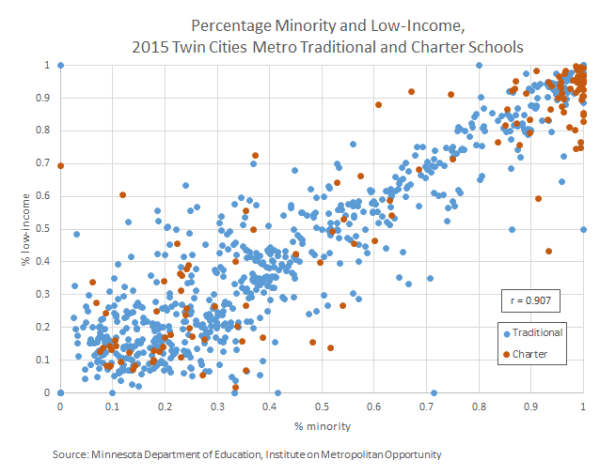
 

Tensions rise at City Council discussion of charter-school funding

Originally published in Baltimore City Paper on October 8, 2015.
—–

A large crowd of charter advocates convened at City Hall last night wearing orange T-shirts that read #SAVE THE CHARTERS BMORE. The City Council was discussing a resolution to withdraw a charter funding proposal that had already been withdrawn. The district’s proposal, introduced on Sept. 8, was scrapped on Sept. 22. Councilman Bill Henry, vice chair of the council’s education committee, introduced the resolution on Sept. 21.

Henry’s resolution called upon the school district to “reconsider its inequitable proposed public charter funding formula to ensure that adequate funds are allocated to all Baltimore students in accordance with state law.”

“All members of the Baltimore City Council co-sponsored this resolution,” said Henry at Wednesday’s meeting. “If we all sign onto it, it can’t be that controversial.” He went on to say that he recognized the proposal was already withdrawn, so “in a very basic but important way we already won.” His hope was to use the meeting as an opportunity “to step back” and think these issues through.

Earlier in the afternoon, before the City Council meeting began, Gregory Thorton, CEO of Baltimore City Public Schools, sent a letter out to families and staff with a district update on the charter-school funding situation. While Thorton expressed a commitment to working with the charter coalition, he said that when the district had originally withdrawn its proposal, it did so under the impression that the charter operators would withdraw their lawsuits too. The district believed this would allow “discussions between us, to be facilitated by former Mayor Kurt Schmoke . . . held publicly, in a spirit of collaboration, and with open dialogue not constrained by pending legal action.”

However, Will McKenna, executive director of Afya Baltimore Inc., an organization that governs charters, challenged the district’s assertion in his testimony last night, saying that none of the charter litigants ever suggested they would drop their lawsuit. “It feels dishonest to have to hear that,” he said.

Councilman Brandon Scott asked the district what evidence they had to suggest that charter operators ever intended to drop their lawsuit. As Dawana Sterrette, the district’s legislative liaison, tried to formulate an answer, parents from the audience tittered. “Honesty is the best policy!” one hollered. “Transparency!” shouted another.

Finally, Sterrette answered that there was “an intermediary” between the school system and the charter representatives, who informed them that the charters would drop their lawsuit if the proposal were scrapped. Sterrette did not name names or provide more concrete details, which was unsatisfying to the crowd.

When I spoke with Bobbi MacDonald, the executive director of City Neighbors Foundation, a few days ago, she told me the litigants had no intention of dropping the lawsuits, but would possibly consider putting their cases on hold.

Kate Primm, the founding principal of the Green School of Baltimore, testified at Wednesday’s meeting, reiterating that the nine operators involved in the litigation had no plans to drop their cases.

The audience was packed with people, mostly charter supporters, but just a few signed up to speak. Several-charter school parents gave speeches, as did a Patterson Park Public Charter School fourth-grader. Kim Truehart, a longtime citizen activist, also offered testimony, pushing the crowd to think more seriously about equity for all of Baltimore’s children.

When I approached Truehart after the meeting, she said she felt the whole evening was just “a publicity stunt” because the mayor, not the council, holds the real power over these issues. Truehart said it “shocked the heck out of her” when Mayor Stephanie Rawlings-Blake decided to intervene in the charter dispute given how hands-off she’s been with education issues generally.

It’s not clear where this all will lead, but several takeaways were evident. One is that the charter advocates aimed to send a message that they believe North Avenue is mismanaging money, which hurts both charter students and traditional students. While everyone acknowledged the need for more state funding, the charter leaders suggested there was more district officials could be doing to efficiently manage their money and get more funds down to the classroom level.

The mediation, led by Kurt Schmoke, will not be binding, but Alison Perkins-Cohen, speaking for the district, said they want it to be a public process, in a public setting, given the funding formula’s impact on the broader community.

It’s not yet clear what the terms of the mediation will be. It was not clear, based on last night’s testimony, whether public mediated talks are a major priority for the charter operators. It is also not clear how having litigation open at the same time as the mediation will impact the parties’ ability to be transparent.

“I don’t understand how Baltimore City Public Schools can be expected to negotiate in good faith with this lawsuit hanging over our heads any more than I can see how Baltimore charter schools can call themselves public schools without paying their fair share of public school costs,” said Ben Dalbey, a city schools parent.

Given that the charter funding formula impacts all district students, and considering that the charter operators are calling for a greater culture of accountability and transparency, finding a way to ensure that the mediation is open to parents, community stakeholders, and reporters seems to be a wise condition for any future effort.